Updated On: 13 Aug 2026
NEW DELHI: In what marked the quietest three minutes and 10 seconds of an otherwise volatile Monsoon Session, the Lok Sabha was adjourned sine die on Thursday morning, bringing a abrupt and silent conclusion to weeks of legislative paralysis.
As the House assembled at 11:00 AM, the national song Vande Mataram was played across the chamber. Members from both sides, including Prime Minister Narendra Modi, stood in attention. Immediately following the rendering, Speaker Om Birla announced the adjournment of the House sine die, capping a session marked by continuous sloganeering, ruckus, and sharp political attacks. In an unusual departure from tradition, Speaker Birla did not read out the customary valedictory address highlighting the performance and productivity of the Lok Sabha—a reflection of the session’s near-total deadlock.
High-Voltage Sparks Before Sudden Closure
The final proceedings opened to high drama. When Union Home Minister Amit Shah entered the Lok Sabha chamber prior to 11:00 AM, Opposition members immediately broke into vociferous chants of “apologise, apologise” and “who ordered the lathi-charge?” In response, MPs from the ruling alliance created a loud commotion. Home Minister Shah gestured to the ruling side MPs to take their seats, and as they complied, Shah smiled at the Opposition’s ongoing sloganeering just moments before Prime Minister Modi entered the House and the national song commenced.
A similar narrative unfolded in the Rajya Sabha, which was also adjourned sine die following a brief and stormy assembly. Proceedings in the Upper House were disrupted after the Congress raised strong objections over an alleged insult to party chief Mallikarjun Kharge, citing an incident in Uttarakhand where his event venue was allegedly “purified” by a group following his rally.
Protests, NEET Row, and Escalating Demands
The Monsoon Session, which commenced on July 20, was defined from its inception by relentless Opposition protests. Initial flashpoints centered on the NEET paper leak controversy, before shifting to allegations regarding the theft of donations at the Ram temple in Ayodhya. Friction escalated further over the July 20 crackdown on protesting students in the Capital, with the Opposition demanding a formal statement from the Home Minister inside the House.
On Wednesday, Home Minister Amit Shah stated that he was fully prepared for a debate and ready to answer every query raised by the Opposition. He urged the Speaker to allocate time for a discussion on the students’ issue in consultation with Opposition leaders. However, the proposal was rejected by the Opposition, which escalated its stance to demand Shah’s resignation.
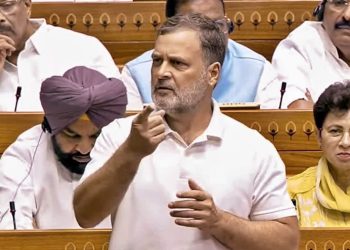
Criticizing the government, Leader of the Opposition Rahul Gandhi said: “Who gave the order to shoot the students? Delhi Police and RAF come under the Home Ministry. Did Amit Shah give the order? If he did, he is culpable, if he didn’t, he is incompetent. In both cases, he should resign.”
11 Bills Passed Amid Ruckus; Only One Debated
On paper, the Lok Sabha passed 11 bills during the session. However, barring the new legislation on paper leaks—which saw approximately 11 hours of debate before passage—all other legislative business was rushed through amid loud noise and sloganeering without substantive discussion, passing by voice vote within minutes.
The rapid passage of key bills included:
-
The Prevention of Insults to National Honour (Amendment) Bill, 2026: Passed in 14 minutes
-
The Tribunals Reforms Bill, 2026: Passed in 12 minutes
-
The National Co-operative Development Corporation (Amendment) Bill, 2026: Passed in 10 minutes
-
The Bankers’ Books Evidence Bill, 2026: Passed in 5 minutes
-
The Mines and Minerals (Development and Regulation) Amendment Bill, 2026: Passed in 5 minutes
-
The Registration of Births and Deaths (Amendment) Bill, 2026: Passed in 4 minutes
-
The Supreme Court (Number of Judges) Amendment Bill, 2026: Passed in 4 minutes
-
The Kerala (Alteration of Name) Bill, 2026: Passed in 4 minutes
-
The Micro, Small and Medium Enterprises Development (Amendment) Bill, 2026: Passed in 3 minutes
-
The Taxation and Other Laws (Amendment) Bill, 2026: Passed in 3 minutes
Additionally, a brief exchange took place on Wednesday when the government moved a proposal to send the Foreign Contribution (Regulation) Amendment Bill, 2026 (FCRA) to a Joint Parliamentary Committee (JPC). Led by the Congress and the Samajwadi Party, the Opposition demanded the complete withdrawal of the bill, labeling it anti-minority and anti-NGO. Rejecting these charges, the government successfully referred the bill to the JPC.
Tea Party Boycott and Complex Protests
The partisan rift extended beyond the floor of the House following the final adjournment. Leaders of the INDIA bloc boycotted the Speaker’s customary post-session tea meeting. While senior NDA leaders, including Prime Minister Modi, attended the gathering, Parliamentary Affairs Minister Kiren Rijiju personally urged Leader of Opposition Rahul Gandhi, Congress MP Priyanka Gandhi, and KC Venugopal to attend. The leaders declined the invitation, proceeding instead to meet Congress president Mallikarjun Kharge at his office.
Meanwhile, competitive demonstrations played out outside the Parliament complex on the session’s final day. While the INDIA bloc continued its protest against Home Minister Amit Shah and raised the Ram Mandir donation issue, NDA MPs staged a counter-protest against police action on protesting students in Congress-governed Jharkhand, directly targeting Rahul Gandhi and the Congress leadership.

ADVERTISEMENT