Updated On: 16 Sep 2026
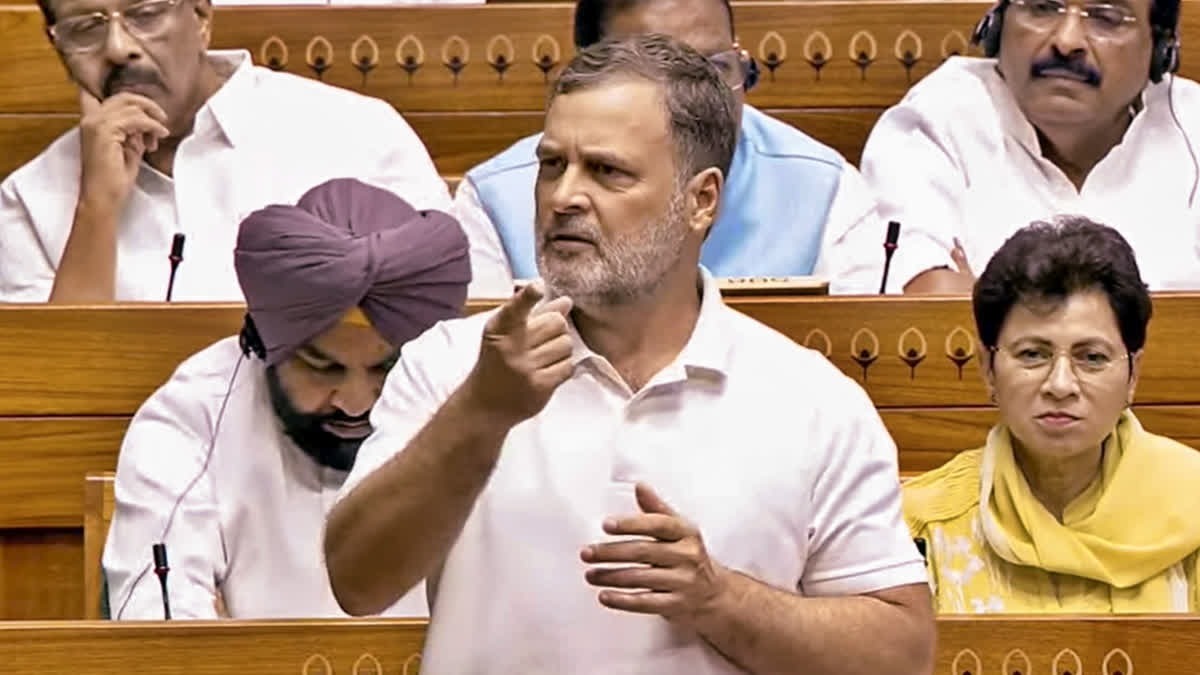
NEW DELHI: Congress MP and Leader of Opposition in the Lok Sabha Rahul Gandhi on Wednesday demanded that Prime Minister Narendra Modi withdraw the new UPI merchant payment charges, calling them a “UPI tax” and alleging that the government had given in to pressure from the United States.
In a video message posted on X, Gandhi urged Modi to roll back the charges and alleged that the new framework would burden Indians while benefiting the US. He also accused Modi of “surrendering” before US President Donald Trump and asked him to “have a spine” and reverse the decision.
Gandhi’s remarks came a day after the National Payments Corporation of India (NPCI) announced a revised Merchant Discount Rate (MDR) framework for specified UPI transactions. From October 15, 2026, a 0.4% MDR will apply to eligible person-to-merchant (P2M) transactions above ₹2,000, capped at ₹300 for transactions of ₹75,000 and above.
The government has maintained that MDR is not a tax and will not be directly collected from customers. Person-to-person UPI payments will remain free regardless of the amount, while merchant payments up to ₹2,000 and transactions covered under the zero-MDR framework will also remain free. The Finance Ministry said around 96% of P2M transactions will remain unaffected.
Under the framework, the 0.4% MDR applies only to specified merchant transactions above ₹2,000, with the ₹300 cap applicable to transactions of ₹75,000 or more.
In essential and thin-margin sectors, including railways, telecommunications, insurance, fuel and agricultural inputs, transactions above ₹2,000 will attract a flat MDR of ₹5.

Gandhi argued that the additional cost could eventually reach consumers if merchants pass it on through higher prices. His criticism focuses on the distinction between the merchant formally paying the MDR and consumers potentially bearing its economic impact.
The government has defended the framework as supporting the financial sustainability and expansion of UPI. It said the MDR will be distributed among banks and payment service providers rather than collected as government revenue.
The dispute remains centred on whether the new charge should be viewed as a merchant-side payment fee, as the government maintains, or a “UPI tax”, as Gandhi has termed it.