Updated on: 29 Jul 2026
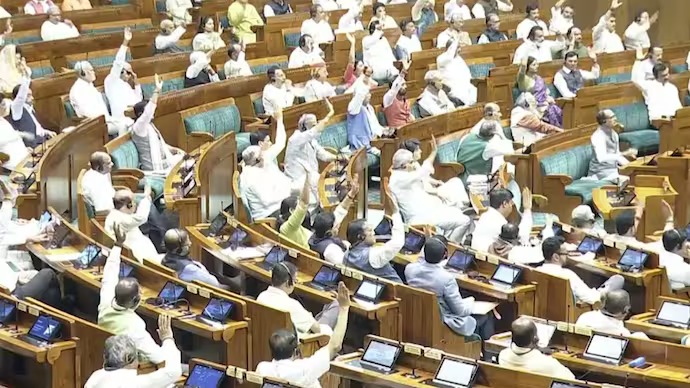
NEW DELHI: The Lok Sabha on Wednesday passed the Public Examinations (Prevention of Unfair Means) Amendment Bill, 2026 by voice vote, ushering in stringent measures against examination irregularities while a political storm erupted over Leader of Opposition (LoP) Rahul Gandhi’s explosive charges against the government.
Introduced by Union Minister Jitendra Singh on July 27 following weeks of nationwide student unrest, the bill now awaits Rajya Sabha approval. It prescribes up to 10 years’ imprisonment and a ₹50 lakh fine for individual offenders, while imposing penalties up to ₹10 crore on organized paper-leak syndicates. The legislation also mandates fast-track courts in every state to conclude investigations within two months.
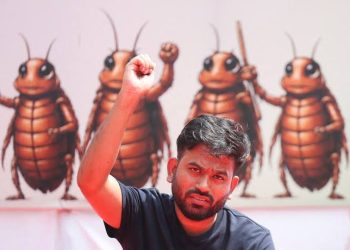
The passage of the bill followed a 36-day agitation led by the Cockroach Janta Party (CJP), which began at Jantar Mantar on June 20, escalated after activist Sonam Wangchuk joined an indefinite fast on June 28, and culminated in a flashpoint march to Parliament on July 20. The protests ended on July 25 after the government accepted key demands, including the resignation of former Union Education Minister Dharmendra Pradhan, maximum compensation for families of NEET-related suicide victims, and the withdrawal of all central and state FIRs against agitators.
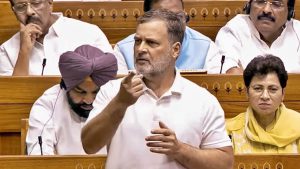 Rahul Gandhi Targets RSS, Terms It ‘The Real Enemy’
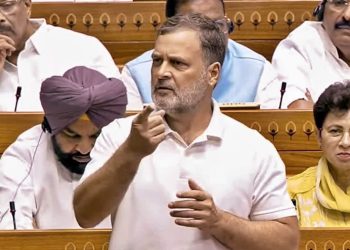
Speaking during the debate, Rahul Gandhi launched a scathing attack on the Rashtriya Swayamsevak Sangh (RSS), calling it the “real enemy” capturing the “soul of India’s education system.”
- Systemic Capture: Gandhi claimed that every university now features an RSS-backed Vice-Chancellor and asserted that an Officer on Special Duty (OSD) in the Minister’s office actually runs the Education Ministry.
- Superficial Resignations: Dismissing Dharmendra Pradhan as a mere “symbol,” Gandhi argued his resignation changed nothing about who holds administrative sway.
- Ideological Charge: He alleged the RSS seeks to turn students into “andhbhakts” (blind followers) and stop them from asking fundamental questions.
- Pride in Student Power: Expressing solidarity with the youth, Gandhi stated every Indian should be proud of the non-violent street demonstrations, adding that BJP leaders would find agreement among their own children if they discussed the issue with them.
- Defining a Student: Quoting an interaction with a young girl, Gandhi contrasted the humility and open-mindedness of genuine learners with the arrogance of those who believe knowledge emerges only from within themselves.
Heavy Uproar Over ‘Shooting’ & Pellet Gun Allegations
The debate turned tumultuous when Gandhi accused Home Minister Amit Shah—who was absent—of authorizing violent police action against student protesters during the July 20 Parliament march.
“The Home Minister ordered the shooting of our students. He put pellets into the blood of our students. He ordered the students of India to be shot… The Home Minister is not here today because he is scared,” Gandhi alleged, asserting that such force could only be authorized by the Minister or the Prime Minister.

The remarks triggered loud protests from Treasury benches:
- Speaker’s Ruling: Speaker Om Birla intervened, reminding the LoP that the Home Minister was not the subject of the debate, directing Gandhi to submit proof, and warning that unparliamentary terms would be expunged.
- Treasury Objections: Parliamentary Affairs Minister Kiren Rijiju demanded an official clarification and apology for the “baseless” claims, while Union Minister Rajnath Singh called out the use of unparliamentary language.
- Government Rebuttal: Replying to the debate, Union Minister Jitendra Singh rejected the charges as “factually incorrect,” clarifying that no bullets or firing orders were issued, only tear gas was used, and firing orders can only originate from a magistrate. He also dismissed claims regarding Amit Shah’s convoy size.