Updated on: 22 Jul 2026
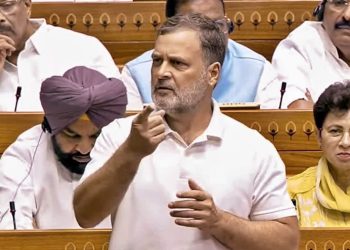
New Delhi: Leader of the Opposition in the Lok Sabha Rahul Gandhi, Congress MP Priyanka Gandhi Vadra and several other Congress leaders were released late Tuesday night after being briefly detained by Delhi Police during a protest outside Prime Minister Narendra Modi’s residence in New Delhi.
Led by Rahul Gandhi and Congress president Mallikarjun Kharge, party leaders staged a protest outside the Prime Minister’s Lok Kalyan Marg residence, demanding PM Modi’s resignation over the police action against students during Monday’s CJP-led protest.
Speaking outside Mandir Marg Police Station after her release, Priyanka Gandhi said, “My brother Rahul Gandhi is very strong and will endure everything. But what happened to the students yesterday was completely wrong. These young people are the future of the country.”
She urged the government to introduce reforms in the education system, prevent paper leaks and hold discussions with students. “The students have genuine grievances, and the government must listen to them,” she said.
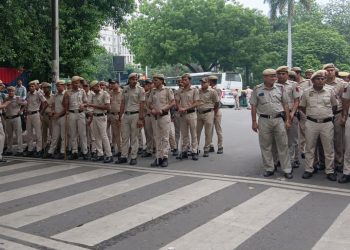
Several Congress MPs and senior leaders joined the dharna, raising slogans against the Prime Minister. After Union Minister Jitendra Singh failed to persuade the protesters to end their sit-in, heavy police deployment followed and Rahul Gandhi, Priyanka Gandhi and other leaders were taken away in police vehicles.
While being detained, Priyanka Gandhi described the Modi-led NDA government as “cowardly”, alleging that it was afraid of the opposition. “We are not afraid of them; they are afraid of us,” she said.
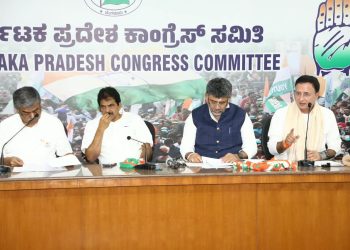
Congress leader Randeep Surjewala accused the government of unleashing “lathis, tear gas and oppression” on students. He said the protest outside the Prime Minister’s residence marked the beginning of a larger movement against the government’s actions.

Earlier, Congress leaders marched towards the Prime Minister’s residence, alleging “police brutality” against students during Monday’s CJP-led march to Parliament. In a post on X, Rahul Gandhi said they had marched to seek answers from the Prime Minister over the alleged crackdown and accused the government of avoiding accountability and refusing to debate the issue in Parliament.
Rahul Gandhi also demanded the resignation of Prime Minister Narendra Modi and Union Home Minister, alleging that the government had destroyed the future of India’s youth.
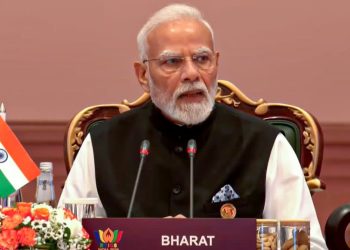
Responding to the protest, Minister of State in the Prime Minister’s Office Jitendra Singh said Rahul Gandhi had “backtracked” from his earlier demand for a parliamentary debate. Singh, along with Union Home Secretary Govind Mohan, met Gandhi and appealed to him to end the sit-in, but claimed the Congress leader instead insisted that Union Education Minister Dharmendra Pradhan should resign.
Singh also alleged that Congress had not submitted any formal notice seeking a discussion on the NEET issue in Parliament as required under the rules. He said the government was prepared to discuss all issues related to NEET and the ongoing protests, adding that Rahul Gandhi’s conduct did not reflect democratic principles.
Earlier in the day, Rahul Gandhi, Priyanka Gandhi Vadra and Congress general secretary K.C. Venugopal visited students injured in Monday’s police action at Ram Manohar Lohia Hospital in Delhi.
The Congress reiterated its demand that the Centre accept responsibility for the alleged NEET paper leak and that Union Education Minister Dharmendra Pradhan resign immediately.
In a statement posted on X, the party said Rahul Gandhi, Priyanka Gandhi and K.C. Venugopal met students injured during the police action and accused the government of suppressing the voices of young people. The party said Prime Minister Modi should apologise for the alleged police brutality and reiterated that the government’s accountability and the Education Minister’s resignation remained the students’ key demands.
Rahul Gandhi also said he had met Lok Sabha Speaker Om Birla along with other opposition MPs to seek a discussion on the issue in Parliament but was informed that such a debate would require the government’s consent first.